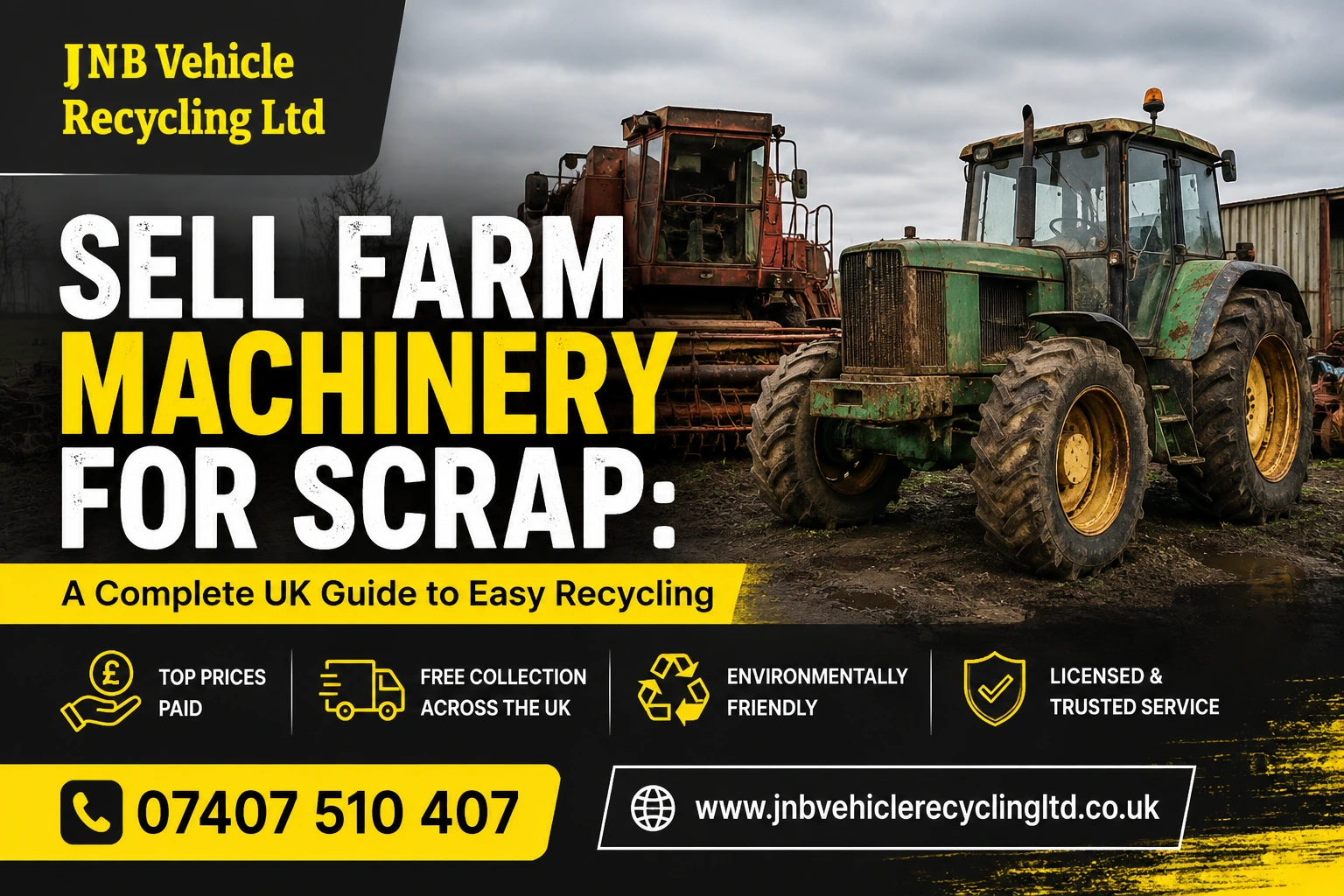
Old tractors, combines, balers and other equipment left to rust in a farmyard are not just an eyesore they are a lost source of value and a potential environmental hazard. If you want to sell farm machinery for scrap, understanding the process, paperwork and valuation methods will help you get a fair price while staying fully compliant with UK regulations. This guide walks farmers, landowners and agricultural contractors through every stage of scrapping farm equipment responsibly.
Why Scrap Farm Machinery Instead of Leaving It to Rust?
Redundant machinery sitting idle does more harm than good. Beyond wasting valuable yard space, ageing equipment can leak oil, hydraulic fluid and diesel into the soil, creating contamination risks that fall under the farmer’s environmental responsibility.
Scrapping unused machinery also converts a depreciating liability into cash. Steel, aluminium, copper wiring and other metals retain scrap value long after the machine has stopped working, and licensed recyclers pay based on weight, metal content and reusable components.
What Counts as "Farm Machinery" for Scrap?
Scrap yards that handle agricultural equipment typically accept a wide range of machinery, including:
- Tractors (two-wheel and four-wheel drive, of any age or condition)
- Combine harvesters and forage harvesters
- Balers, mowers and tedders
- Ploughs, cultivators and seed drills
- Trailers, muck spreaders and sprayers
- Static and mobile grain dryers
- Telehandlers and loaders
Even machinery that no longer runs, has missing parts, or has been damaged in an accident or fire can usually still be scrapped, since recyclers value the metal and components rather than roadworthiness.
How the Farm Machinery Scrapping Process Works
Step 1: Request a Valuation
The process begins with a valuation. Reputable recyclers ask for details such as the make, model, age, weight, and condition of the machinery, along with photographs where possible. This allows them to provide an accurate, no-obligation quote before any collection is arranged.
Step 2: Arrange Collection
Farm machinery is often too large, heavy or immobile to transport easily, so a specialist collection service is essential. A professional recycler will send appropriate transport flatbed lorries, low-loaders, or plant trailers depending on the size of the equipment, and collect directly from the farm or field.
Step 3: Documentation and Payment
Once the machinery is collected, the recycler issues a receipt confirming the transaction, and payment is arranged by bank transfer. Cash payments for scrap metal have been illegal in the UK since the Scrap Metal Dealers Act 2013, so any yard offering cash on collection should be treated with caution.
Step 4: Depollution and Recycling
Licensed sites then depollute the machine draining fuel, oil, coolant and hydraulic fluid before dismantling it for parts and processing the remaining metal for recycling. This ensures fluids and hazardous materials are disposed of safely rather than leaching into land or watercourses.
What Paperwork Do You Need to Scrap Farm Machinery?
Unlike cars, most farm machinery is not registered with the DVLA, so there is no V5C logbook requirement in most cases. However, you should still be prepared to provide:
- Proof of ownership — an invoice, purchase receipt, or dealership record showing you own the equipment.
- Proof of identity and address — most licensed scrap dealers are legally required to verify the seller’s identity under the Scrap Metal Dealers Act 2013.
- Registration documents, if the machinery is registered for road use (some tractors and self-propelled equipment fall into this category).
A trustworthy recycler will always ask for this information rather than skip it, since it is a legal requirement rather than an optional formality.
How Is Farm Machinery Valued for Scrap?
Valuation is based on several factors rather than a single flat rate:
- Weight and metal type — heavier machinery with high steel content generally commands a higher scrap value, and current market prices for ferrous and non-ferrous metals fluctuate with global commodity markets.
- Condition and completeness — machinery with intact engines, hydraulics, or electronics may be worth more for parts resale before being scrapped.
- Collection distance and accessibility — remote farms or machinery stuck in difficult terrain can affect the final quote due to transport costs.
- Current scrap metal prices — these change regularly, so a quote obtained today may differ from one obtained a few weeks later.
Getting quotes from more than one licensed dealer is a sensible way to confirm you are receiving a fair market price for your equipment.
Is It Legal to Scrap Farm Machinery Yourself?
You are entitled to sell your own machinery for scrap, but the buyer must be a licensed scrap metal dealer registered with their local authority under the Scrap Metal Dealers Act 2013. This licensing requirement exists to prevent metal theft and ensure environmentally responsible disposal.
Before agreeing to a sale, it is worth checking that the recycler is registered, insured, and equipped to handle the depollution of fluids and hazardous materials particularly for machinery containing hydraulic systems, batteries, or fuel tanks.
Environmental Benefits of Recycling Farm Machinery
Recycling agricultural machinery keeps large volumes of metal out of landfill and reduces the demand for newly mined raw materials. Steel recycling, for example, requires significantly less energy than producing steel from virgin ore, which is one of the reasons the UK’s scrap metal recycling industry plays such an important role in the broader circular economy.
Proper depollution also prevents oils, coolants and hydraulic fluids from contaminating farmland, watercourses, and groundwater a genuine risk when old machinery is simply abandoned rather than processed by a licensed facility.
Beyond Farm Machinery: Scrapping Other Vehicles
Farms often accumulate more than just agricultural equipment. If you also have an end-of-life car sitting unused, the process for how to scrap my car thirsk follows similar principles around documentation and licensed collection. The same applies if you’re based further afield and searching for how to scrap my car richmond or scrap my car yarm.
For larger commercial vehicles used on the farm, such as haulage lorries reaching the end of their working life, the process to scrap my lorry involves comparable steps: valuation, licensed collection, and depollution before dismantling. If you’re weighing up whether scrapping is worthwhile at all, this guide on how vehicle recycling saves time and money explains the practical benefits in more depth, and our related guide to scrapping a van covers the process for farm vans and pickups specifically.
Conclusion
Scrapping farm machinery doesn’t need to be complicated when you work with a licensed, experienced recycler who understands both the paperwork and the practicalities of collecting heavy agricultural equipment. From valuation through to depollution and recycling, each step exists to protect you legally and ensure the process is handled responsibly. If you’re ready to sell farm machinery for scrap, JNB Vehicle Recycling Ltd offers a straightforward, fully compliant service from accurate valuations to on-site collection helping farmers across the region turn redundant equipment into fair value while doing right by the environment.
Frequently Asked Questions
1. Can I scrap a tractor that no longer runs?
Yes. Non-running tractors and machinery are routinely scrapped, since recyclers value the metal content and reusable parts rather than whether the engine still operates.
2. Do I need a V5C logbook to scrap farm machinery?
Most farm machinery is unregistered and does not require a V5C. However, any self-propelled equipment that is registered for road use will need its registration documents provided at collection.
3.How quickly can farm machinery be collected?
Collection timescales vary by recycler and location, but many licensed scrap dealers can arrange collection within a few days of providing a valuation, particularly for straightforward jobs with clear site access.
4. Will I be paid in cash for scrap machinery?
No. Under the Scrap Metal Dealers Act 2013, cash payments for scrap metal are illegal in the UK. Payment must be made by traceable methods such as bank transfer.
5. What happens to the machinery after it's scrapped?
Licensed recyclers first depollute the machinery by draining fuels and fluids, then dismantle it to recover reusable parts before processing the remaining metal for recycling into new steel and other materials.