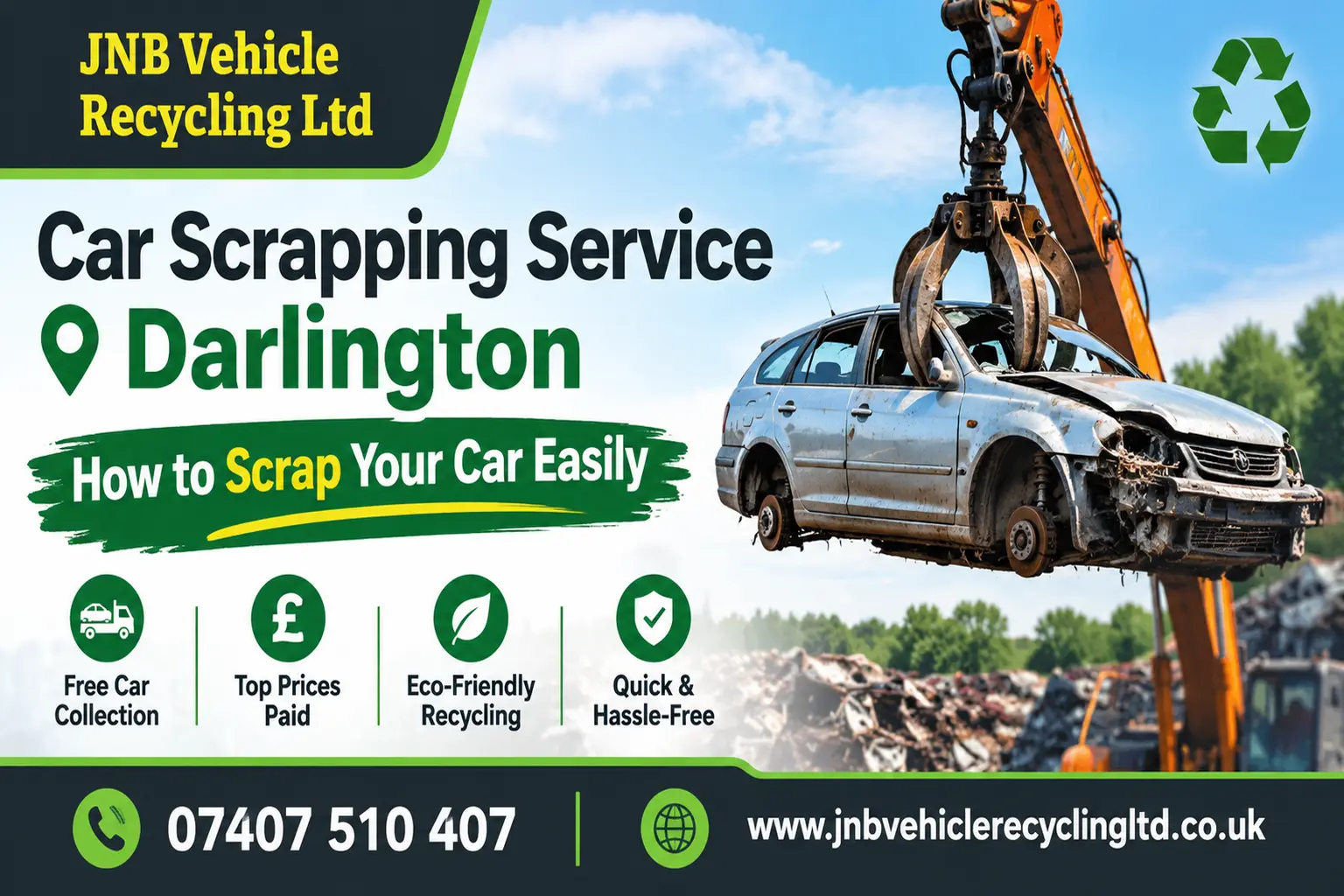
If your vehicle has reached the end of its useful life, finding a reliable Car Scrapping Service Darlington doesn’t have to be stressful. Whether your car has failed its MOT, been written off after an accident, or simply become too costly to repair, understanding the scrapping process helps you get a fair price while staying fully compliant with UK regulations. This guide walks you through everything Darlington drivers need to know, from paperwork to collection to what actually happens to your vehicle once it’s recycled.
Why Scrapping a Car Properly Matters
Every vehicle scrapped in the UK must go through an Authorised Treatment Facility (ATF), as required under the End of Life Vehicles Regulations 2003. This isn’t optional guidance it’s a legal requirement designed to prevent environmental harm and stop unlicensed operators from illegally dumping vehicle fluids, batteries, and hazardous materials.
Using an unlicensed scrap dealer can leave you legally liable if the vehicle is later linked to fly-tipping or improper disposal, even after it’s left your possession. This is why confirming ATF licensing before handing over your keys is one of the most important steps in the entire process.
How the Car Scrapping Process Works
Scrapping a car generally follows a consistent sequence, regardless of the vehicle’s age, condition, or make. Understanding each stage helps you avoid delays and ensures you receive appropriate documentation at every step.
Step 1: Get a Valuation
Most scrap yards, including established recyclers in the Darlington area, offer valuations based on:
- Vehicle make, model, and age
- Current weight and metal content
- Condition of reusable parts (engine, gearbox, catalytic converter)
- Current scrap metal market prices, which fluctuate regularly
A genuine valuation should be given promptly, typically over the phone or via an online form, using your registration number and a few basic details.
Step 2: Arrange Collection
Once you accept a quote, collection is usually arranged within 24 to 48 hours. Reputable services collect directly from your home, workplace, or wherever the vehicle is currently located, at no extra cost. You shouldn’t need to drive the vehicle to a yard yourself, particularly if it’s no longer roadworthy.
Step 3: Provide the Correct Paperwork
Before the vehicle is taken away, you’ll need to hand over specific documents. Missing paperwork is one of the most common reasons scrapping is delayed, so it’s worth preparing these in advance.
Step 4: Receive a Certificate of Destruction
Once your vehicle has been officially processed, you should receive a Certificate of Destruction (CoD). This document confirms the car has been legally scrapped and is no longer your responsibility.
Step 5: Vehicle Recycling and Depollution
The vehicle then undergoes depollution and dismantling before recyclable materials are recovered.
What Paperwork Do You Need to Scrap a Car?
This is one of the most frequently asked questions among Darlington drivers preparing to scrap a vehicle. At minimum, you should have:
- The V5C logbook — to prove ownership and notify the DVLA of the change
- Photo ID — such as a driving licence or passport, matching the registered keeper’s name
- MOT certificate (if available) — not always required but useful for reference
- Proof of address — sometimes requested to confirm keeper details
If you’ve lost your V5C, you can still scrap the car, but you’ll need to notify the DVLA separately using the vehicle’s registration details. A licensed ATF will guide you through this if it applies to your situation.
Notifying the DVLA: A Legal Requirement
Once your vehicle is scrapped, the DVLA must be informed immediately. This step is often misunderstood, so it’s worth clarifying directly:
Do I need to notify the DVLA myself, or does the scrap yard do it? A licensed ATF is legally required to notify the DVLA electronically on the same day the vehicle is scrapped. However, it remains your responsibility to check this has happened, as you’re still liable for tax and insurance on the vehicle until the DVLA confirms deregistration.
Failing to confirm this step can result in continued tax liability or, in rare cases, penalty notices for a vehicle you no longer own.
How Is Value Calculated When Scrapping a Vehicle?
Scrap value isn’t a fixed figure it depends on several genuine variables rather than guesswork or generic pricing.
- Weight in ferrous and non-ferrous metal — heavier vehicles typically yield more scrap value
- Market metal prices — these shift weekly based on global commodity markets
- Salvageable parts — engines, transmissions, and catalytic converters often hold resale value beyond scrap weight
- Vehicle condition — a complete vehicle with intact components is usually worth more than one already stripped
Because these factors change regularly, a quote given today may differ slightly from one given next month. This is normal and reflects genuine market movement rather than inconsistent pricing.
What Happens to a Car Once It's Recycled?
Understanding the recycling process itself helps explain why proper ATF processing matters environmentally, not just legally.
- Depollution — fuel, oil, coolant, brake fluid, and the battery are removed and disposed of safely
- Parts removal — reusable components are extracted for resale where viable
- Shredding — the remaining shell is shredded into fragments
- Material separation — ferrous and non-ferrous metals are separated using magnetic and eddy current systems
- Recycling — recovered metal is sent to smelters and reused in new manufacturing
According to the Environment Agency’s guidance on ATFs, this process is designed to maximise material recovery while minimising landfill waste and environmental contamination.
Vans, Cars, and Other Vehicles: What's Different?
While the core process is similar, vans often carry additional considerations, particularly around commercial registration and higher metal yield due to their size. If you’re ready to move forward, you can sell my van for scrap using the same documentation principles outlined above.
It’s also worth noting that scrapping isn’t limited to road vehicles. Watercraft owners looking to responsibly dispose of an old vessel can similarly sell my boat for scrap through a licensed recycler, following comparable depollution and material recovery standards.
Scrapping Services Beyond Darlington
Vehicle owners across North Yorkshire and County Durham often search for local options nearest to them. If you’re based outside Darlington itself, services such as scrap my car thirsk or scrap my car richmond follow the same licensed collection and paperwork process, so location shouldn’t be a barrier to scrapping responsibly.
Common Mistakes to Avoid When Scrapping Your Car
- Not checking ATF licensing — always confirm the yard is authorised before collection
- Forgetting to remove personal belongings — check glove boxes, boot space, and under seats
- Not retaining proof of scrapping — keep your Certificate of Destruction for your own records
- Assuming DVLA notification is automatic without confirming it — always verify this yourself
- Accepting cash-only deals with no documentation — this is illegal for ATFs and leaves you unprotected
Final Thoughts
Scrapping a car doesn’t need to be complicated when you understand the process, prepare the right paperwork, and choose a licensed recycler. From valuation through to collection, DVLA notification, and environmentally responsible recycling, each step exists to protect both you and the environment. For drivers seeking a straightforward, compliant, and transparent Car Scrapping Service Darlington, working with an experienced and properly licensed provider like JNB Vehicle Recycling Ltd ensures your vehicle is handled correctly from start to finish, giving you peace of mind and one less thing to worry about.
Frequently Asked Questions
1. How much is my car worth when scrapped?
Scrap value depends on the vehicle’s weight, current metal prices, and any salvageable parts. Most Darlington scrap services provide a quote based on your registration number before collection.
2. Do I need an MOT to scrap my car?
No. Vehicles being scrapped don’t require a valid MOT, as they’re being taken off the road permanently rather than driven.
3. How quickly can my car be collected?
Most licensed scrap services in Darlington offer collection within 24 to 48 hours of accepting a quote, often free of charge.
4. What documents do I need to scrap my car?
You’ll need the V5C logbook and valid photo ID at minimum. A Certificate of Destruction should be provided once the vehicle is processed.
5. Is it illegal to scrap a car without using a licensed ATF?
Yes. Under the End of Life Vehicles Regulations 2003, only Authorised Treatment Facilities can legally process end-of-life vehicles in the UK.