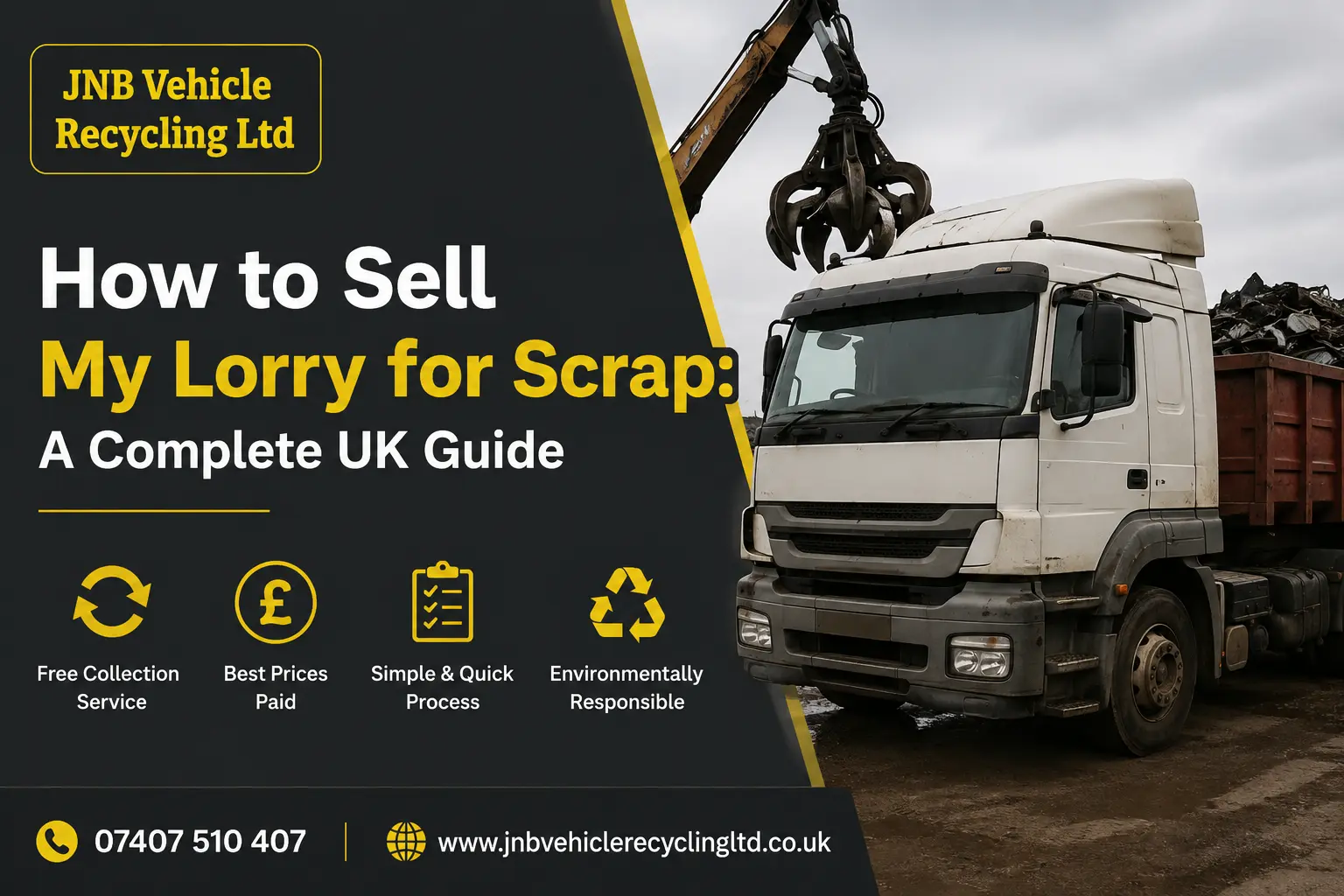
If your HGV, tipper, or commercial lorry has reached the end of its working life, you may be wondering how to sell my lorry for scrap without the process becoming a headache. Between DVLA paperwork, environmental regulations, and finding a licensed collector, scrapping a large commercial vehicle is more involved than scrapping a car. This guide walks you through every stage, from valuation to final documentation, so you can scrap your lorry with confidence.
Why Scrapping a Lorry Is Different from Scrapping a Car
Lorries and other heavy goods vehicles fall under different regulatory categories than standard cars. Because of their size, weight, and the volume of recyclable materials they contain, they require specialist handling equipment and, in many cases, a Certificate of Destruction issued by an Authorised Treatment Facility (ATF).
Commercial vehicles also often carry additional documentation, such as an operator’s licence disc, tachograph records, or MOT test certificates specific to goods vehicles. Before you sell my lorry for scrap, it’s worth understanding that the process, while similar in spirit to car recycling, has extra steps built around compliance.
Step 1: Assess Whether Your Lorry Is Genuinely Ready for Scrap
Not every ageing lorry needs to be scrapped outright. Consider these factors before deciding:
- Repair costs versus vehicle value — if repair bills exceed what the lorry is realistically worth, scrapping is usually the sensible choice.
- MOT and roadworthiness failures — persistent structural, chassis, or emissions failures often signal the end of a vehicle’s economic life.
- Age and mileage — high-mileage lorries with worn drivetrains may no longer be cost-effective to maintain.
- Accident damage — if the chassis or cab has sustained significant structural damage, repair may not be viable.
If several of these apply, scrapping is typically both the most practical and the most environmentally responsible option.
Step 2: Get an Accurate Valuation
Lorry scrap value is based primarily on weight and metal content, since HGVs contain substantially more steel and non-ferrous metal than a standard car. Valuation typically depends on:
- Vehicle weight — heavier lorries yield more scrap metal, which generally means a higher price.
- Current scrap metal prices — steel and non-ferrous metal prices fluctuate with global commodity markets.
- Condition of reusable parts — engines, gearboxes, axles, and tyres in good condition can add value if they’re suitable for resale or reuse.
- Vehicle type — tippers, box vans, curtain-siders, and tractor units all carry different average scrap weights.
A reputable recycler will provide a transparent, no-obligation valuation based on these factors rather than a vague estimate. Always ask how the figure was calculated, and be wary of quotes that seem unusually high, as these can sometimes be revised downward after collection.
Step 3: Choose a Licensed and Authorised Recycler
This is arguably the most important decision in the entire process. UK law requires that end-of-life vehicles, including lorries, are only handled by an Authorised Treatment Facility. Using an unlicensed scrap dealer can leave you legally liable if the vehicle is later found abandoned, dumped, or illegally exported.
When vetting a recycler, check for:
- A valid Environment Agency waste carrier’s licence.
- ATF (Authorised Treatment Facility) accreditation.
- A track record of issuing proper Certificates of Destruction.
- Clear, itemised paperwork for every transaction.
Companies such as JNB Vehicle Recycling Ltd operate as licensed treatment facilities, meaning the entire process, from collection through to depollution and dismantling, is carried out in line with UK environmental law.
Step 4: Prepare Your Lorry and Paperwork
Before collection day, gather the following documents and information:
- V5C registration certificate (logbook) — required to notify the DVLA of the change of keeper.
- Operator’s licence disc — should be removed if applicable, as it’s tied to your operating licence, not the vehicle.
- Service history and MOT certificates — not essential for scrapping, but useful if any parts are being sold separately.
- Proof of identity — most recyclers require ID to comply with anti-theft and money laundering regulations.
You should also remove all personal belongings, tools, and any equipment not permanently fixed to the vehicle, along with number plates if you intend to retain them (this requires a separate DVLA application).
Step 5: Arrange Collection
Because lorries are too large for standard car transporters, collection requires specialist recovery vehicles capable of handling HGV weight and dimensions. A professional recycler will:
- Confirm access requirements at your site (yard, depot, or roadside).
- Schedule collection at a time that minimises disruption to your operations.
- Provide a qualified driver experienced in recovering heavy commercial vehicles.
- Issue collection paperwork on the day, confirming the vehicle has left your possession.
If you operate a fleet and are scrapping multiple vehicles, ask whether the recycler can coordinate multi-vehicle collections to reduce downtime.
Step 6: Notify the DVLA
Once your lorry has been collected, you are legally required to notify the DVLA that the vehicle has been scrapped. In most cases, a licensed ATF will submit a Certificate of Destruction (CoD) electronically on your behalf, which automatically updates the DVLA record. You should still:
- Confirm with the recycler that the CoD has been submitted.
- Keep a copy of the CoD for your own records, particularly for tax, insurance, or fleet management purposes.
- Cancel any road tax, insurance, or operator’s licence entries linked to that specific vehicle.
Failing to confirm this step can leave you technically liable for a vehicle that no longer exists, so always request written confirmation.
What Happens to a Lorry After Scrapping?
Understanding the recycling process helps explain why using a licensed facility matters. A typical end-of-life lorry undergoes:
- Depollution — removal and safe disposal of fuel, oil, coolant, brake fluid, and battery acid.
- Parts recovery — reusable components such as engines, gearboxes, and axles are removed for resale where viable.
- Dismantling — the chassis, cab, and body panels are stripped down.
- Shredding and metal separation — steel and non-ferrous metals are separated for recycling.
- Material recovery — recovered metal is sent to processors for reuse in new manufacturing.
This structured approach ensures hazardous materials never enter landfill or watercourses, and that the maximum proportion of the vehicle is recycled responsibly.
Making the Right Choice for Your Commercial Vehicle
Scrapping a lorry is a straightforward process when handled by the right company, but it does require attention to paperwork, valuation transparency, and legal compliance that go beyond scrapping a standard car. Whether you’re retiring a single vehicle or managing a fleet, working with a licensed Authorised Treatment Facility protects you legally and ensures the vehicle is recycled responsibly.
If you’re ready to sell my lorry for scrap, choosing an experienced, fully licensed recycler makes the entire process smoother from valuation through to DVLA notification. This same standard of transparent, compliant service applies whether you’re looking to scrap my car northallerton, scrap my car newcastle, or scrap my car sunderland. And it’s not just road vehicles either if you also need to sell my boat for scrap, the same principles of proper licensing and documentation apply.
For fleet operators, farmers, hauliers, and anyone else facing the end of a lorry’s working life, JNB Vehicle Recycling Ltd offers a fully licensed, transparent service covering valuation, collection, and all the necessary paperwork, giving you a straightforward, compliant way to scrap your lorry without the guesswork.
Frequently Asked Questions
1. Do I need a Certificate of Destruction for a lorry?
Yes. Any vehicle scrapped in the UK, including HGVs, must be processed by an Authorised Treatment Facility, which issues a Certificate of Destruction confirming the vehicle has been legally and permanently taken out of use.
2. Can I scrap a lorry with an outstanding finance agreement?
No, not without first settling or gaining permission from the finance company. The vehicle legally belongs to the lender until the agreement is paid off, so you must contact them before arranging scrapping.
3.How is lorry scrap value calculated?
Scrap value is primarily based on the vehicle’s weight in scrap metal, adjusted for current market prices, plus any additional value from reusable parts such as engines or axles.
4. Is it illegal to sell a lorry to an unlicensed scrap dealer?
Yes. UK law requires end-of-life vehicles to be handled only by licensed waste carriers and Authorised Treatment Facilities. Using an unlicensed dealer can leave the registered keeper legally responsible for the vehicle.
5. How long does the lorry scrapping process take?
From initial valuation to collection, the process typically takes a few days, depending on site access and scheduling. Paperwork such as the Certificate of Destruction is usually issued shortly after collection.